“I Lowered My A1C From 7.0 to 5.6 and My Feet Still Burned Every Night for Three Years. Here’s the One Compound No Doctor Ever Mentioned That Finally Put the Fire Out.”
By night four I slept until the alarm for the first time since my diagnosis. By week three I made dinner and ate it on my own side of the bed. Here’s exactly what I tried first, what failed, and what every doctor in three years never mentioned once.

If you’re reading this because your A1C is finally in target and your feet still burn through the sheets at 2am, you can stop hunting for the slice of cake.
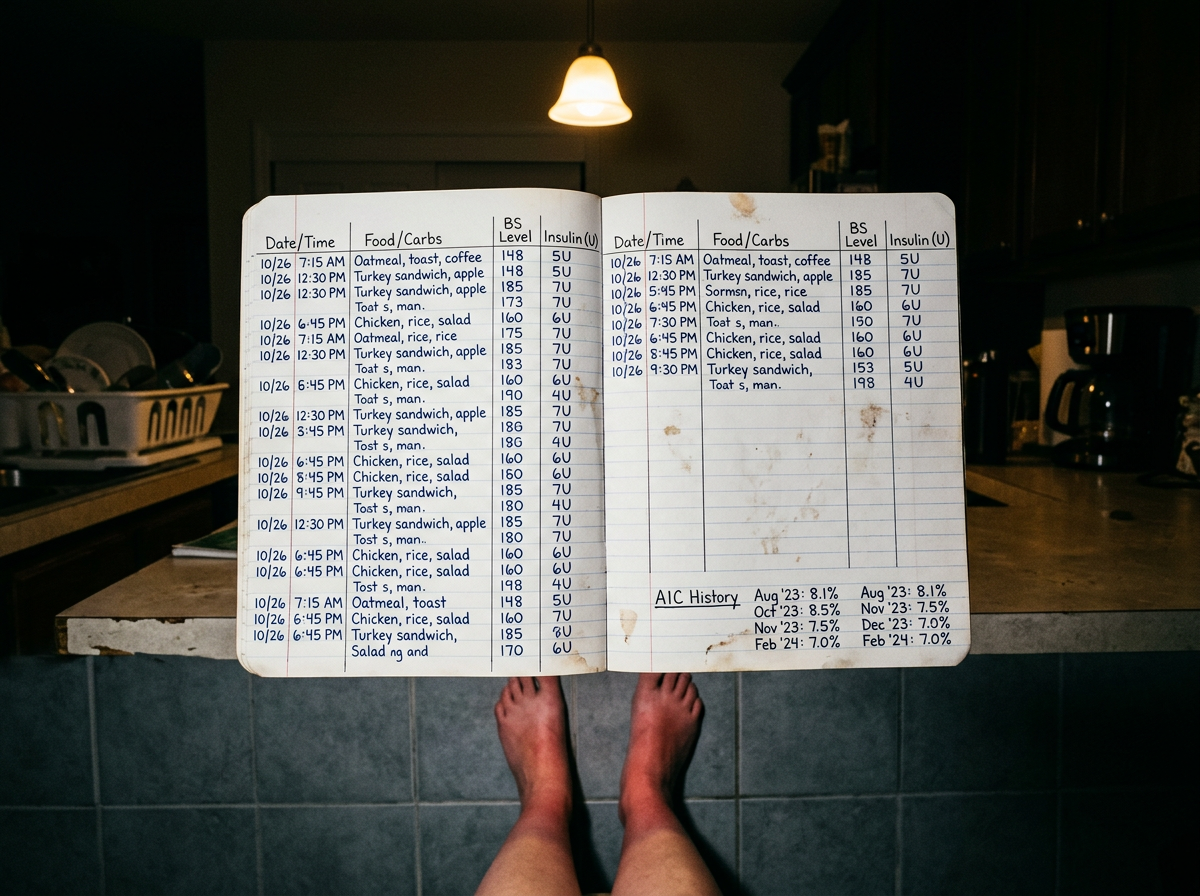
I dragged mine from 7.0 to 5.6. I logged meals, walked the miles, lost the weight.
And every night my feet burned like I had done nothing at all.
I’m Sharon. For thirty years I ran payroll for a trucking outfit, so I trust numbers more than I trust people.
When the number came down and the burning didn’t, I blamed myself.
Then I found the part no one had explained. Your body makes PEA, a compound that calms inflamed nerves. After years of high blood sugar, demand can outrun supply even when the chart improves.
That is why a “perfect” A1C can do nothing for feet still on fire at 2am.
By week three, I made dinner, ate it with Ray, and went to bed on my own side without doing blood-sugar math in the dark.
The first sign came on night four: my feet stayed under the covers and I slept until the alarm. This is not magic and it is not fast for everyone. About 1 in 8 people the trials looked at saw nothing.
I’m going to tell you exactly what I found, in the order I found it.
The Year I Started Saying I Was Fine the Way Other People Say Good Morning
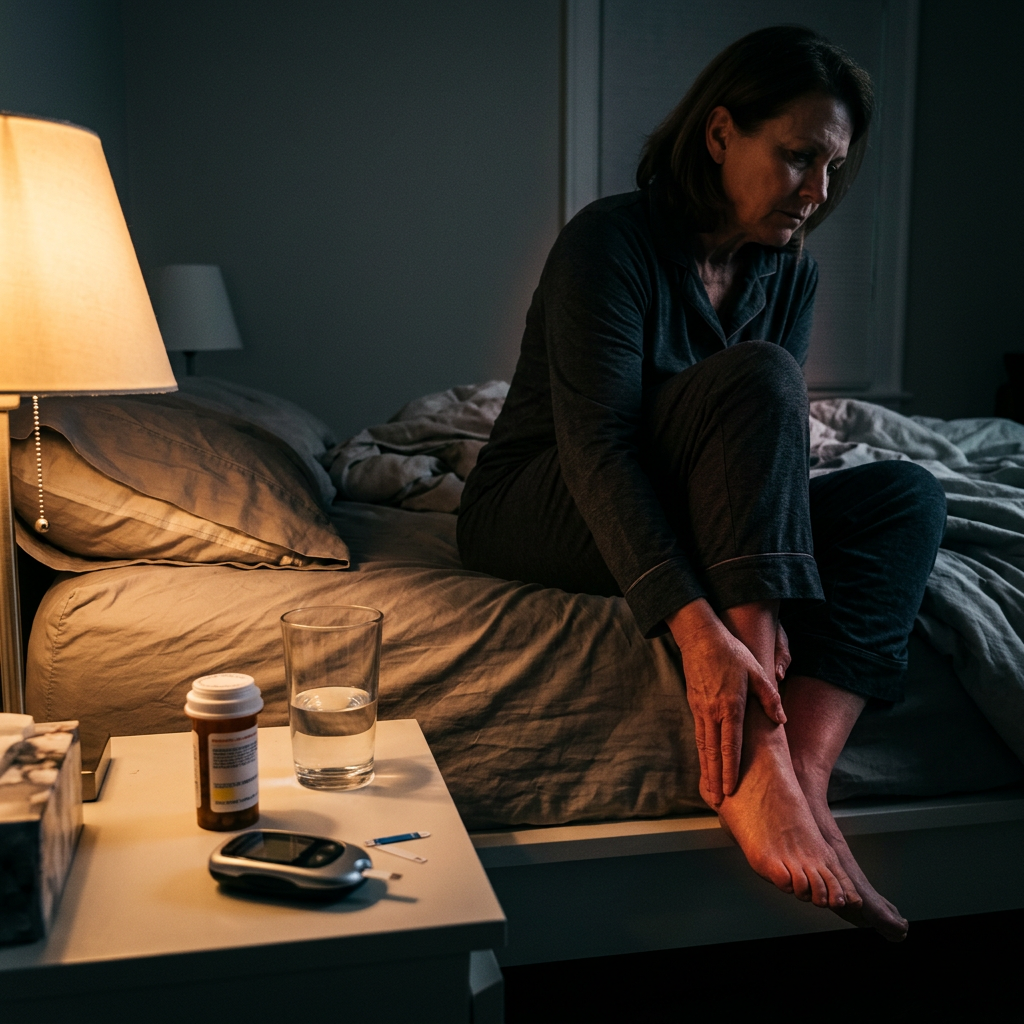
The burning came at night. Always at night. By nine or ten the rest of me would wind down and my feet would start up, like the wiring had its own schedule.
Some nights it was a deep ache. Some nights it was an electric jab through the top of the foot.
I stopped wearing socks to bed and slept with my feet hanging off the mattress because I could not stand the sheet on my toes.
Ray asked if I was alright. I said I was fine.
I had started saying I was fine the way other people say good morning.
You may already know this list:
- Feet that start burning when the house goes quiet
- Socks or a bedsheet that feel unbearable on your toes
- Sharp electric jolts that arrive out of nowhere
- Lying awake replaying every meal, certain you caused it
If you’re checking more than two, it is not easing on its own.
The $240 Drawer That Never Touched the Real Problem
When my sister mentioned a supplement her neighbor swore by, I snapped that I was not handing money to a company counting on desperate diabetics.
So I went the respectable route, and the respectable route emptied my wallet just the same.
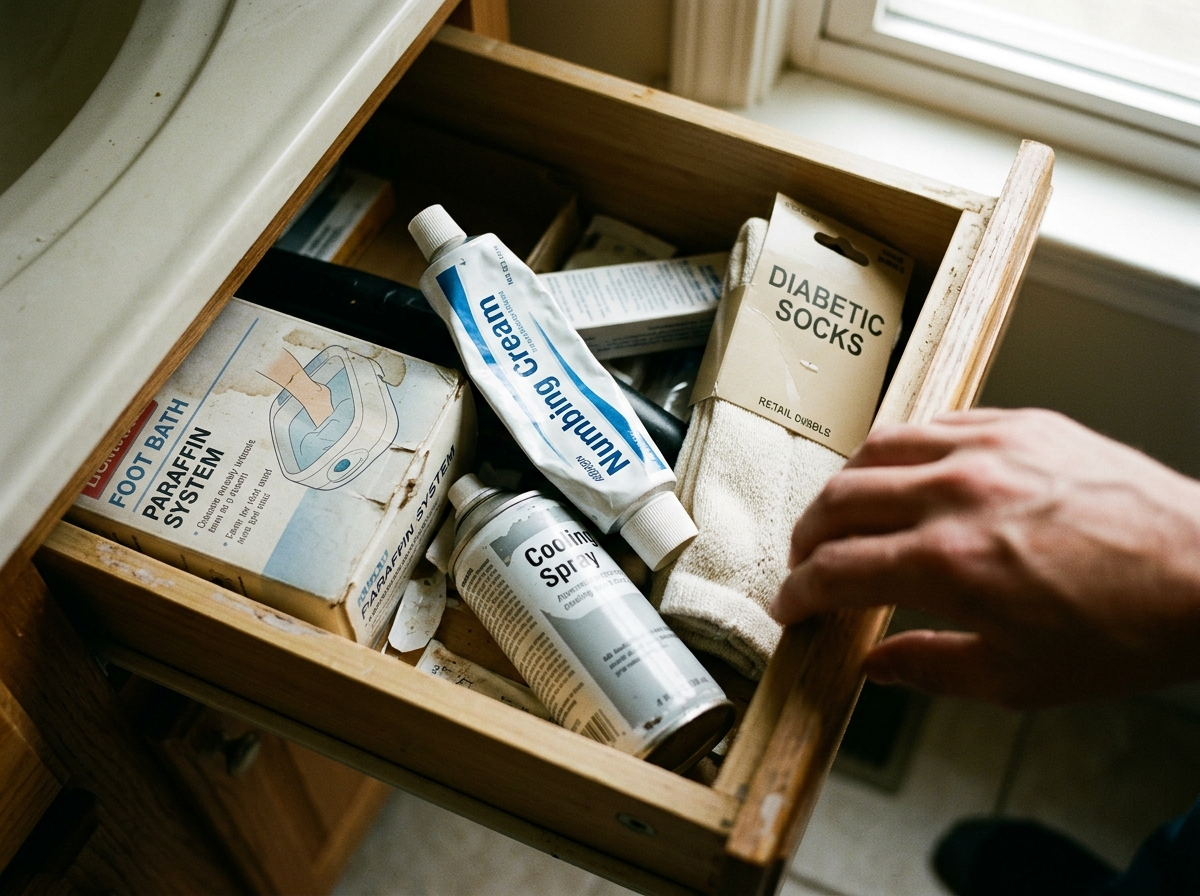
Lidocaine cream, cooling sprays, diabetic socks my feet could not tolerate, alpha lipoic acid, benfotiamine, soaks, cold tile, and the same bedtime bargain every night.
Two hundred and forty dollars across a single year. Not one of them reached the burning for longer than it took to wash off.
Then came the appointment I had waited five weeks for.
My endocrinologist, Dr. Pruett, looked at my log, looked at the screen, and smiled at the number.
“Five-six. That’s excellent, Sharon. Whatever you’re doing, keep doing it.”
I said, but my feet. He was already typing. The burning should settle as the numbers stayed down. Nerves take time. He handed me a gabapentin printout.
Eight minutes. I had waited five weeks for eight minutes.
He billed my insurance for telling me to be patient with the one part of my body that was screaming.
My Granddaughter’s 6th Birthday. The Moment I Stopped Blaming Myself.
At Mia’s sixth birthday, I sat in a hard kitchen chair at the edge of the room, smiling through the cake song while everyone I loved had an ordinary afternoon.
My daughter crouched down and asked if I was okay. I said I was fine.
I had done everything right for three years, and I was performing a woman who was not in pain.
For the first time the thought was not what did I eat or where did I slip.
It was: this is not my fault.

The Forum Comment From a Stranger I Read Three Times Before I Opened My Wallet
Months later, my sister sent a screenshot from a woman in a diabetic group. Same story: A1C down, feet still on fire every night.
She wrote that she had stopped hanging her feet off the bed. She was sleeping again, and she named what finally did it.
I read it in my kitchen and thought, another miracle for sale.
Then I thought about the chair at Mia’s party, and I got out my card.
The Body-Native Off-Switch No Doctor in Three Years Ever Mentioned
The box took five days. I spent four of them doing the homework I should have done first.
Your body makes PEA, a calming compound released where nerves and tissue are inflamed, to quiet the signal before it runs away from you.
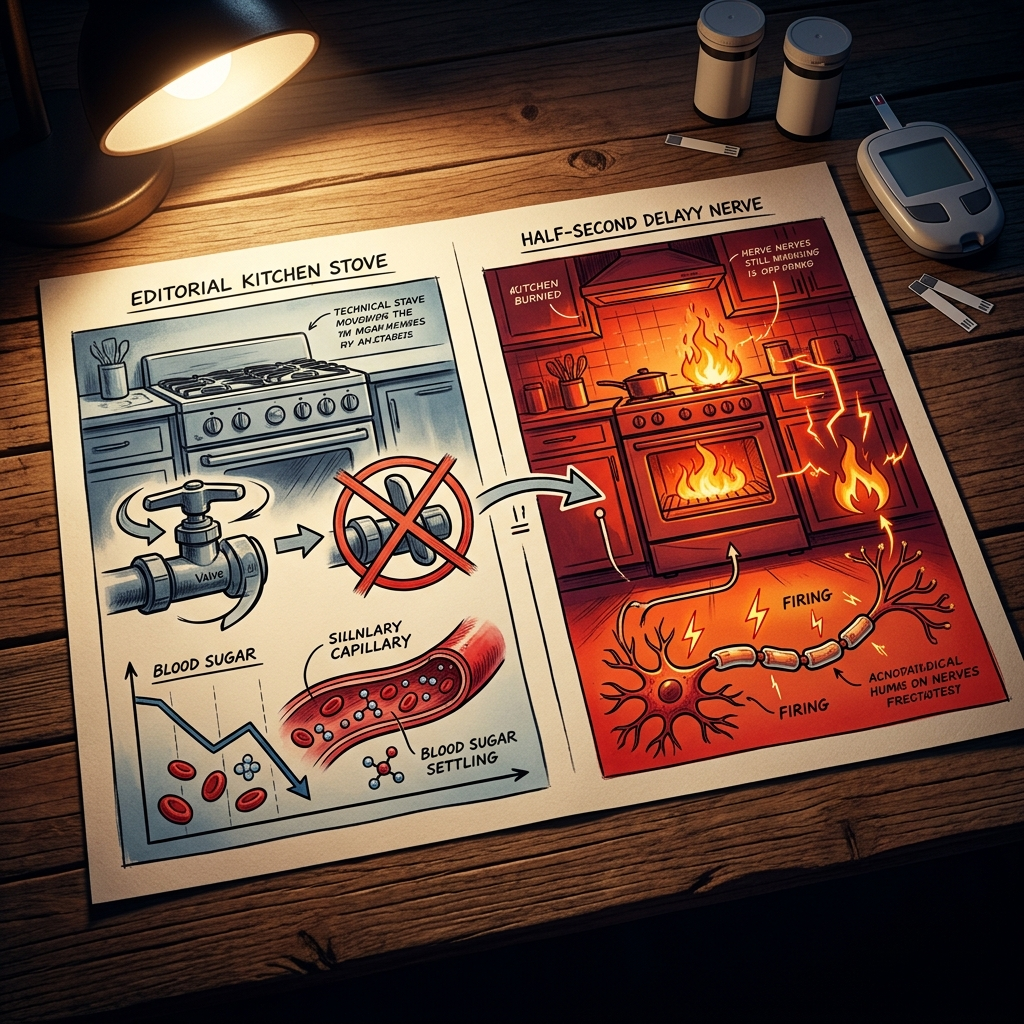
In a diabetic body under years of strain, demand can outpace supply. The off-switch cannot keep up, and the nerve keeps firing after the blood sugar has been wrestled back into line.
Fixing your blood sugar stops adding fuel. PEA calms the nerves already on fire while you wait for the numbers to catch up.
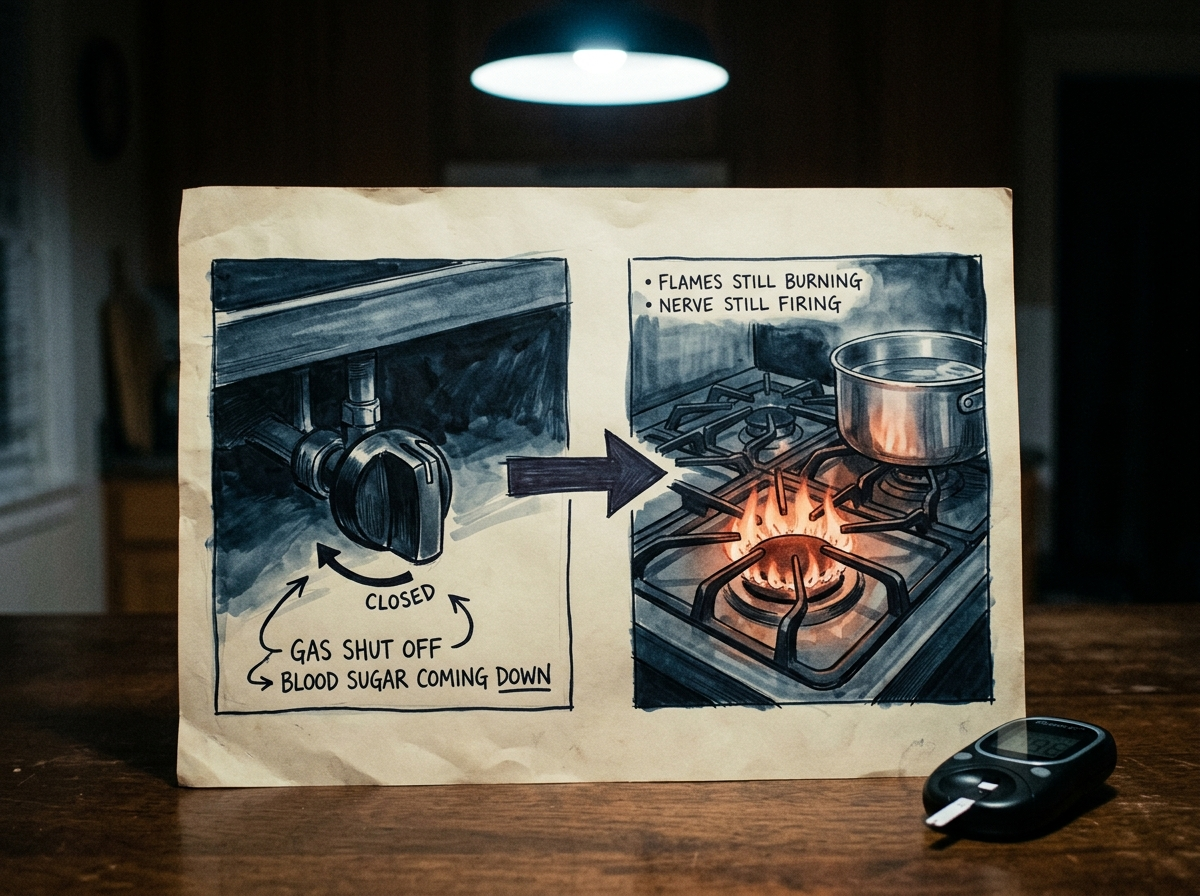
It is the difference between shutting off the gas line and putting out the fire already burning in the room.
The creams numbed the skin. The socks and soaks fought the symptom. Gabapentin muffled the signal. The A1C turned off the gas.
None of them topped up the off-switch my own body had run short of.
This is not a discount countdown. Micronized PEA has to be milled fine enough to absorb, then released in tested batches instead of endless bulk runs.
At the time I checked, the current batch showed 2,742 bottles available.
Why Every Endocrinologist Writes the Same Script
Dr. Pruett was not a bad man. The system measures one number and treats that number as the finish line. Bring the A1C down and the chart reads treated.
The burning at 2am does not get treated like the number on the screen.
The model stopped looking the moment the number came down. My feet did not.
The bottle said Youfirst PEA 600MG, micronized.
Aggregate review of multiple clinical trials. Verified independently before launch.
I read the label three times.
Six hundred milligrams, the same dose as the one study that had bothered to look.
Micronized, which the company explained meant the particles were ground small enough for a body to actually absorb, instead of passing through the way half my drawer had.
I almost left it on the counter for a week.
Old habit. The skeptic in me wanted to be right one more time.
Night 4: The First Time I Slept Until the Alarm in Three Years
The fourth night, I slept until the alarm.
I noticed it the way you notice a sound that has stopped.
I woke and it was six in the morning, my feet were under the covers, and I hadn’t stood at the bathroom sink once.
I almost talked myself out of it. One good night. Anyone can have one good night.

Then it was three nights out of four, and the cold tap stayed off.
By the second week the burning I’d lived at an eight most nights was sitting closer to a two.
Not gone. Quieter. Low enough to sleep underneath.
The changes were small, and they were specific.
I ate a piece of bread at dinner and didn’t spend the night paying for it.
I walked to the bathroom at one in the morning without bracing my hand on the wall for the first step.
The gabapentin moved to the back of the drawer, for the bad nights only, instead of every night on schedule.
Three weeks in, I made dinner, ate it sitting down with Ray, and went to bed on my own side of the bed without once doing the math on what it would cost me.
Ray noticed before I said anything. He asked one night if I was alright, the way he’d asked a hundred times, and I realized I hadn’t said the word fine in weeks, because for once it would have been true.

A woman named Carol from a diabetic group I’d joined posted almost the same week I did.
Sixty-one, type 2, A1C down to 5.8 and proud of it, feet still on fire every night her chart called her a success.
She’d been sleeping on the couch for a year. Same feet, same number, same flat surprise that what finally worked was the one nobody in a white coat had ever mentioned.
What another year of this actually costs you.
- 365 broken nights, with 2am burning, cold-tile trips, and the kind of sleep that never reaches the deep part.
- $240 to $600 more in creams, socks, sprays, copays, and repeat experiments that never touch the nerve.
- More fall-risk mornings, because a burning, half-numb first step in the dark is not a small thing after 60.
- Another year of Ray asking if you are alright, and another year of answering fine when you mean please let me sleep.
- More time for the wire to stay angry. The nerve does not calm itself just because you learn to live around it.
I am sixty-three. The woman who left the comment that finally made me order was seventy-one.
She wrote, “I waited seven years before I tried this. I cannot get those seven years back.”
That is the line I read on the worst night I had, and it is the line I want you to read on yours.
I’m not in the habit of recommending anything to strangers. But I spent three years and a drawer full of money being wrong about this, so I’ll tell you what I now tell the women in that group who sound exactly like I did.
Let me tell you what it isn’t, first, because that’s how you’ll know I’m being straight with you.
It isn’t fast. The first three nights it did nothing, and if what you want is something that knocks the pain out within the hour, gabapentin does that and this doesn’t.
What this does is work on the reason the nerve is screaming, and that takes a week or two, not an hour.
If you’re looking for overnight, save your money.
If it works for you the way it worked for me, the first thing you notice will be the same thing I did.
Somewhere around the fourth or fifth night, your feet stay under the covers and you sleep until morning.
The part that let me try it at all was the ninety days. They send your money back if it does nothing for you, no argument, a full three months to find out.
Current Youfirst PEA 600MG options
- Subscription, one bottle$29.99
- Subscription, Buy 2 Get 1 Free$59.99
- One-time, one bottle$39.99
- One-time, Buy 2 Get 1 Free$79.99
I wasn’t risking anything but the price of one more product that might not work, and this time it did.
A year from now, if nothing changes, you already know the shape of it.
The number on the meter keeps looking good at every appointment.
The burning keeps you upright at 2am.
The gabapentin creeps back to every night. You keep your own side of the bed cold so you don’t wake the person in it.
Or, sometime in the next two weeks, you notice you slept through.
You eat dinner without the math. You walk to the bathroom without the braced first step. You move back to your own side of the bed, and the person next to you sleeps through the night because you finally do.
The choice seems pretty obvious to me.
Later is one more night with your feet hung off the end of the bed.
Later is one more family table you sit out at the edge of.
Later is another two hundred dollars in a drawer that never worked.
Later ends the night you finally top up the off-switch your body ran short of.
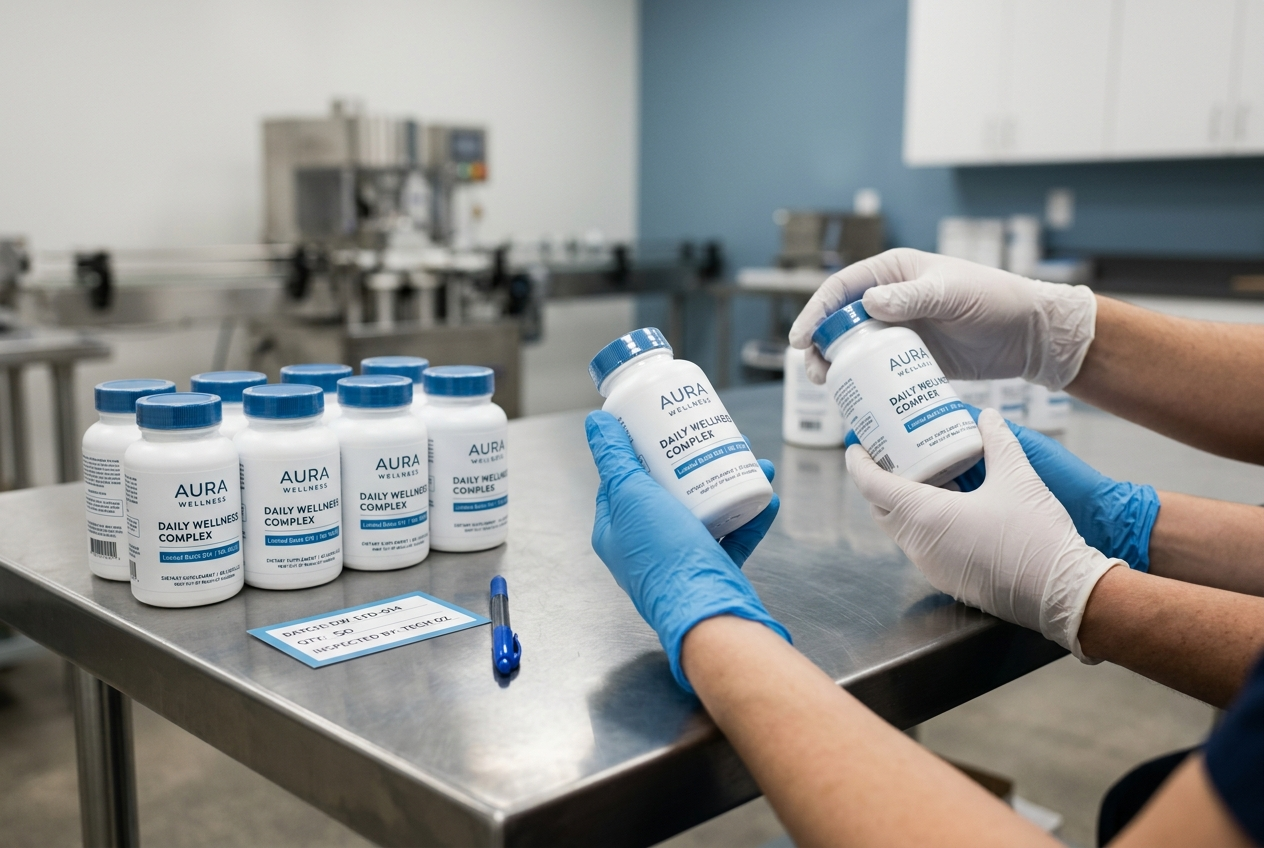
I ordered from youfirstlabs.com, not a marketplace listing, because the cheap bottles I saw elsewhere were usually smaller, vague on form, or never said micronized in a way I could verify.
This is the one I take every morning now. See if it’s still in stock where you are.


P.S.
Mia turned seven last month. Same kitchen, same yellow cake.
I stood the whole time.
I didn’t sit in the chair at the edge of the room, and nobody had to ask me if I was alright.
P.P.S.
The compound isn’t exotic and it isn’t new.
It’s the same one your body already makes, studied at six hundred milligrams a day in diabetic nerve pain, which is the exact dose in the bottle.
I checked. Checking is the one thing I’ve always been good at.
P.P.P.S.
Last I looked there were 2,742 bottles of this batch. When it falls under 900, the page goes down until the next run clears testing.
The number on your meter will still be fine tomorrow. Your feet will still be on fire.
Only one of those changes if you do something about it.
Can someone who actually has diabetic nerve pain tell me if this is real? My A1C is 5.9 and my feet still burn every single night and I’ve wasted so much money already. I want to believe it but I’ve been let down a lot.
Brenda, I was you six months ago. Type 2, numbers great, feet on fire. Started this and by the end of the first week I slept through for the first time in over a year. I’m not a review person. I just didn’t want you to wait as long as I did.
Three years of burning, A1C of 5.4, three different doctors who all told me to keep my sugar down like I hadn’t been. This is the first thing that touched the actual burning instead of just numbing my skin.
I’ve had products “work” before and then quit on me after two weeks. How long does this actually hold?
Sharon, fair question, it’s the one I had too. It’s been four months for me now. Still sleeping in my own bed. Still quiet. It didn’t quit.
The part that got me was being able to wear socks again. Such a small thing and I cried over it. My husband had stopped asking how I slept because the answer was always bad. He asks again now.