They Told Me Rest Would Calm It Down. Weeks Later the Same Hot Pain Still Shot Down My Leg, Until One Compound Went After the Nerve Alarm That Would Not Switch Off.
Week two the nights stopped being the worst part of my day. By week four the leg had quit lighting up every time I stood after sitting. Here is the rule I wrote down before I spent another dollar.

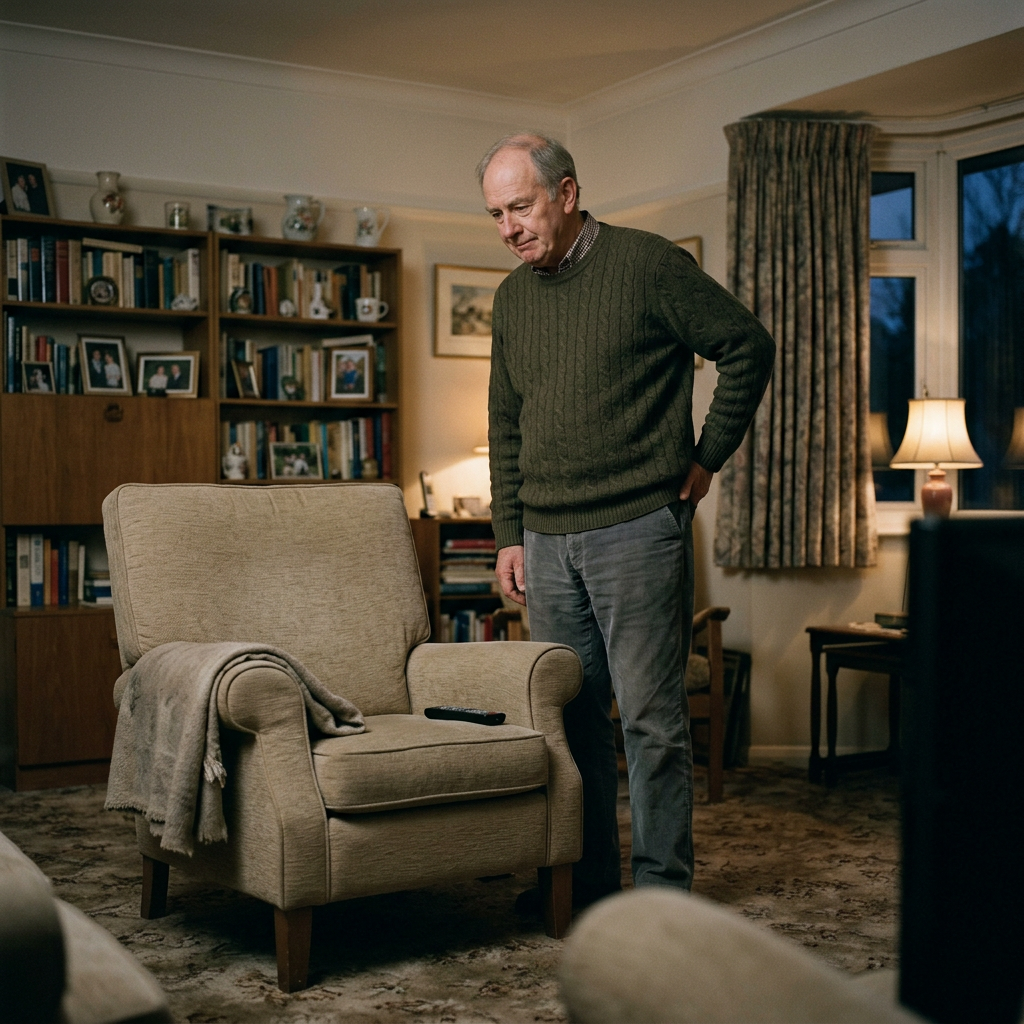
If you rested, waited out the weeks they told you to, and the leg still will not switch off, you are not imagining it. I was just as skeptical, so I checked it against everything before I trusted it. I ended up finding the one compound that finally went after the nerve alarm.
I bought the first bottle because I was desperate and returned the third one because I was angry. Not PEA. I mean the usual drawer — turmeric, magnesium, fish oil, a nerve support blend with a label so busy it looked like a legal document.
I am fifty-nine. I fix practical problems with practical answers.
My whole medical philosophy: rest it, stretch it, stop making a drama out of it.
The pain crept in over almost two years. A hum in my right glute after long shifts. A burn after the drive home. A spot deep in the buttock that felt like I was sitting on a golf ball nobody else could see.
I called it sleeping wrong. I called it sitting wrong. I called it getting older. Everything except what it was.
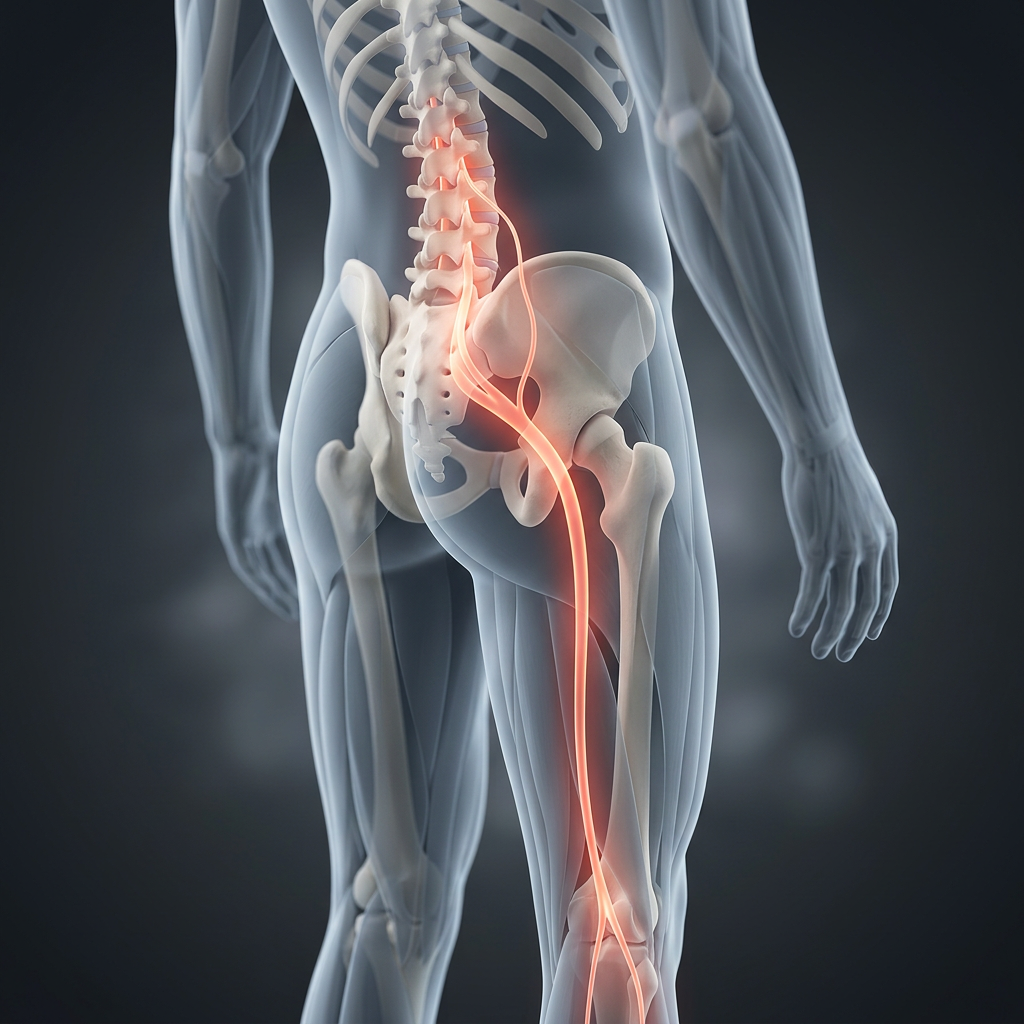
Then one morning I lowered myself into the driver's seat and the hum became a wire pulled tight from my lower back through my hip and down the outside of my leg.
Standing at the back of every meeting. Could not sit through a meal. Drove to my mother's and pulled over twice — my foot went unreliable on the pedal.
Almost two years of hum. Then four months of fire.
Three MRIs. Three radiologists. Three "nothing structurally wrong."
The worst part was not the pain. The worst part was thinking maybe I was crazy.
Quick check - how many of these are running your life right now?
- Pain that runs from your lower back or hip down one leg
- Sitting that makes the leg burn, buzz, stab, or go numb within minutes
- Pulling over on normal drives just to get out of the seat
- Standing through meals, meetings, or family moments while pretending you prefer to stand
- The sensation of "sitting on a golf ball" or "lacrosse ball" deep in one buttock
- An MRI that came back "clean" while your leg still feels lit on fire
- Physical therapy or stretches a doctor handed you that made the pain worse, not better
Three or more? The part nobody named for me is the part nobody is naming for you. Keep reading.
The $400 Shelf of Hope (And the Clean Scan That Made Me Feel Crazy)
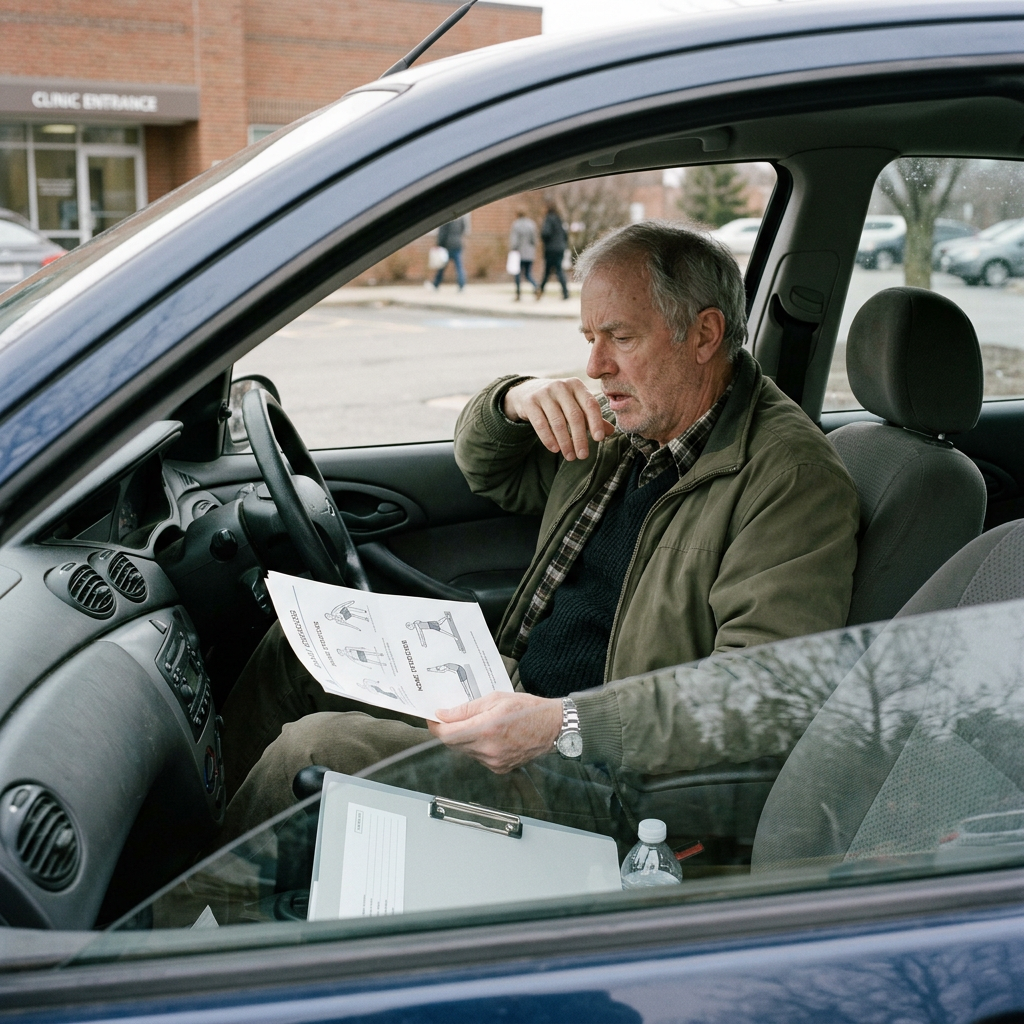
The first doctor pressed around my hip, had me bend forward, and told me it was probably a flare that would settle.
Give it a few weeks.
A few weeks of standing while everyone else sits. A few weeks of lying on the bedroom floor because the couch is impossible.
Then came imaging.
Clean enough.
Just clean enough to be sent home with a stretch sheet.
The stretches made it worse.
So I did what people like me do when the system gives you nothing useful. I started buying things.
Around $400 gone. And I still could not sit through a film with my wife.
I did not feel hopeful anymore.
I felt stupid.
It was not the scan that finally broke me.
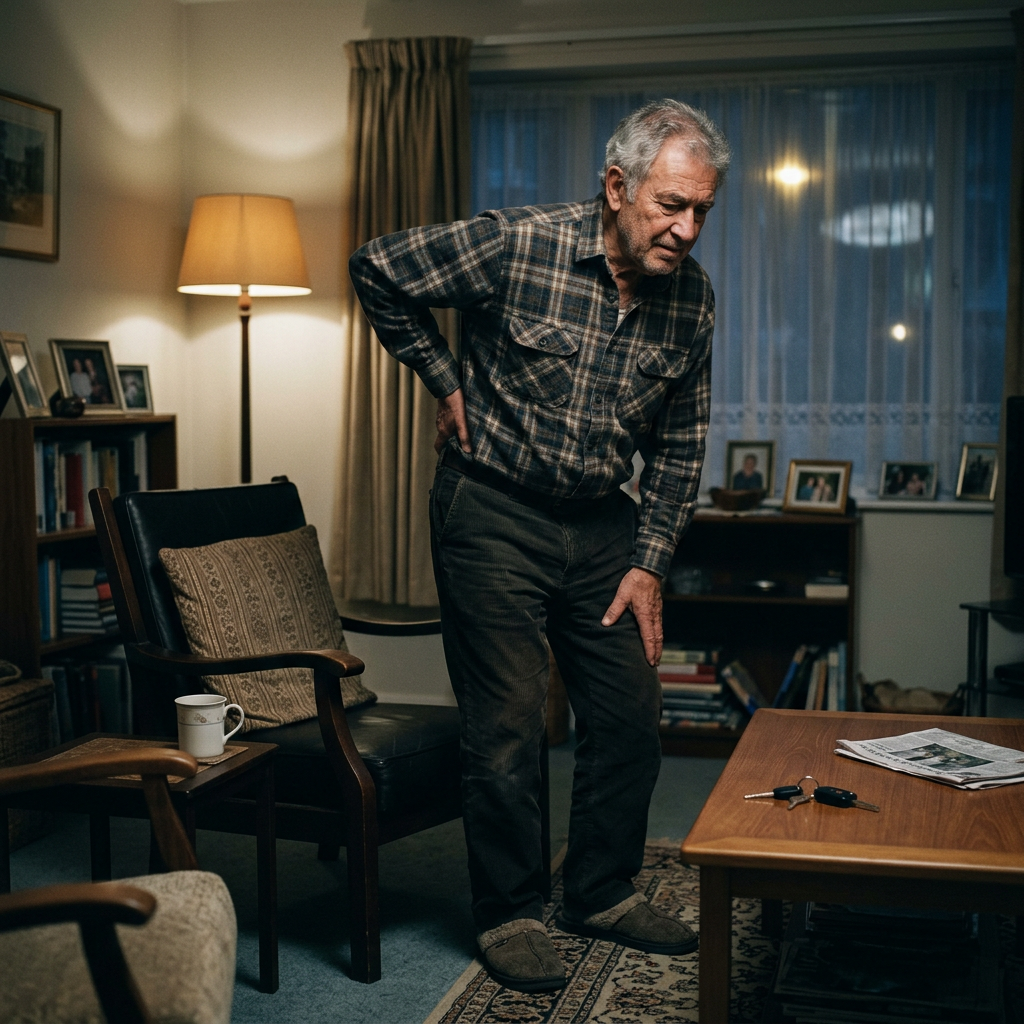
It was a Saturday night, standing in my own living room, while my wife watched a film alone because I could not stay in the chair next to her.
I had become the man who walked around the house looking for somewhere he could exist without pain. Not sit. Not lie down. Just exist.
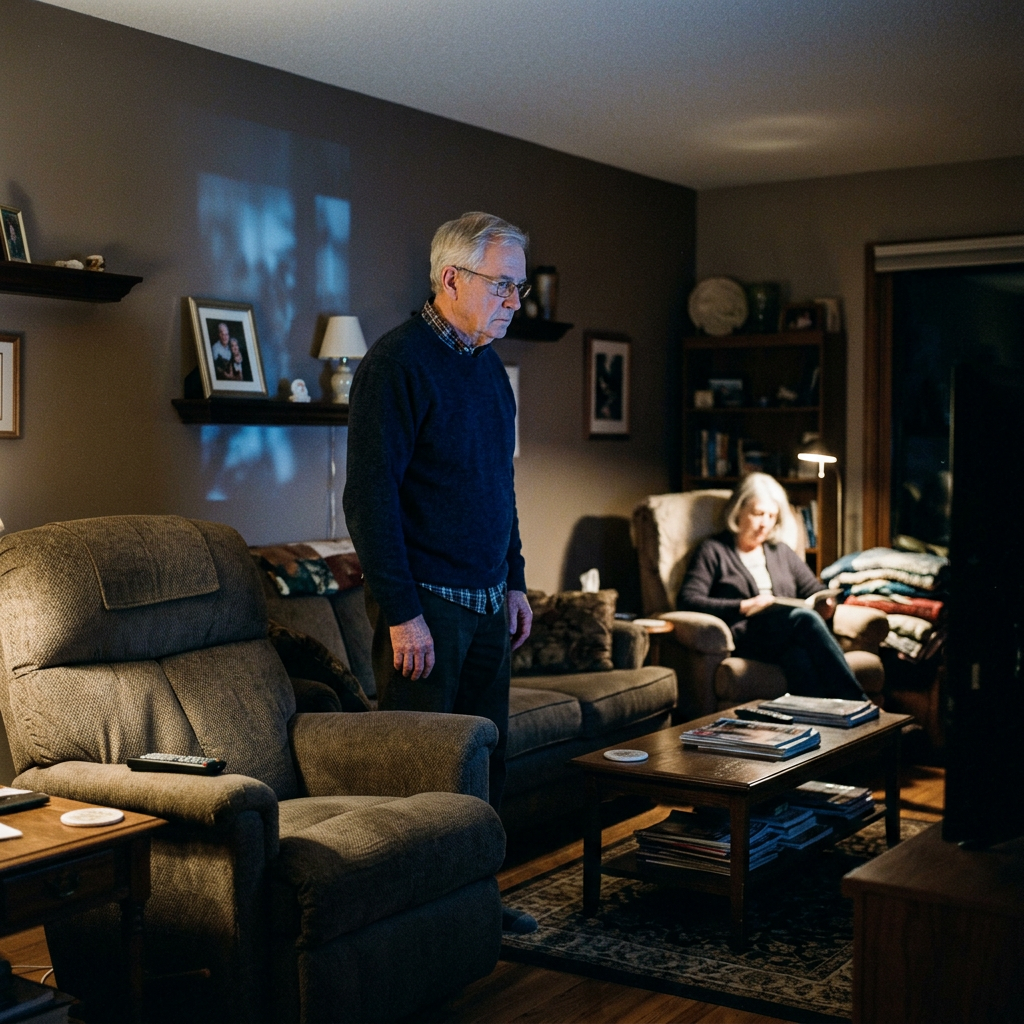
It was not just the chair at home.
Three weeks before I found that thread, I sent Travis to run the floor inspection. Travis is twenty-six.
I told him it was a training opportunity. It was not.
It was a Tuesday morning where I already knew what two hours of uneven concrete was going to cost my leg, and I was standing at the break room window watching a kid I trained do the job I have done every week for eleven years.
That morning I could not walk it.
That was the day I stopped calling it something I was managing and admitted it was something that was managing me.
What a Stranger Said That Made Me Angry Because It Sounded Too Accurate
I found it buried in a thread arguing about sciatica, clean scans, and the muscles disc imaging cannot see. One said the stretches her physio gave her made the pain worse for days at a time. Another said her MRI had come back clean three times while the doctors called it "muscular."
Then someone wrote one sentence that stopped me cold.
A disc MRI does not photograph muscles. The piriformis is a deep muscle in the buttock that can spasm and clamp the sciatic nerve underneath it. The scan reads clean because the scan was never looking at the muscle. The stretches your doctor printed tighten the noose.
That phrase got under my skin.
The stranger named one muscle. The part that stopped me was bigger than the name.
The scan was never looking at the real thing in the first place.
A disc pressing the nerve. A deep muscle clamping it. An old injury the nerve had not stopped remembering.
Three different doors. Same picture. Same shrug from the same radiologist.
My first reaction was to reject it because I knew what came next. Someone would recommend a miracle supplement, and I would be the idiot buying bottle number seven.
So I did what skeptics do. I searched against it.
The Chair Was Padding the Problem. The Muscle Was Choking the Nerve. The Nerve Was Still Screaming.
Sitting was not causing all of it. Sitting was exposing it.
When I sat, the muscle that was already spasmed clamped harder on the sciatic nerve running underneath it. The nerve, already inflamed from months of being squeezed, lit up down my leg. In the car, same thing. On the couch, same thing. At dinner, same thing.
A cushion pads the chair. A stretch sheet tightens the muscle already in spasm. Ibuprofen takes the edge off for a few hours. None of them reach the nerve.
That was the big domino.
I had been asking how to sit without pain. The real question was why the nerve was still firing when the scan showed nothing — and what was between the chair and the nerve that nobody had looked at.
Three different switches. One alarm. One calming signal in the body that quiets all three.
The scan can be clean. The muscle can be invisible. The nerve can still be loud.
When I went looking, one name kept turning up. Palmitoylethanolamide. PEA, for short. A compound the body already makes — the calming signal it sends to an overactive nerve.
I read that line twice. A man who has spent four hundred dollars on the wrong bottles does not let one sentence land on the first pass.
What I Checked Before I Believed It
Sources: 2019 analysis led by Professor Giorgio Cruccu at Sapienza University in Rome of micronized PEA in low-back pain and sciatica; 2023 systematic review of PEA in chronic pain.
PEA is not a 20-minute painkiller story. The research profile I found pointed to a build-over-weeks pattern, especially where nerve pain and function were involved.

The phrase I kept seeing was PPAR-alpha. Normally I would have closed the laptop there because I do not buy anything that needs a chemistry lesson to sell it.
But this time the mechanism matched my life.
The nerve was not acting like a sore muscle.
It was acting like a wire stuck on.
That is why "give it time" felt like being abandoned with a smoke alarm screaming in the house.
PEA did not promise to rebuild my spine. It did not promise to erase every bad day. It did not promise I would wake up new.
It promised a way to support the body's own calming system so the nerve could stop acting like every chair was an emergency.
That was the first claim in months that did not insult me.
The clean-scan pipeline is built to find the obvious thing, rule out the scary thing, and send you home when the picture looks good enough.
But a picture does not sit in your car seat. A picture does not wake up at 2 a.m. because rolling onto the wrong side shoots pain down your leg.
When the scan is clean, everyone acts like the story is over.
For me, that was where the real story started.
Because if the scan cannot see the nerve stuck in alarm mode, and the stretch sheet is pulling on the thing that already feels trapped, then "nothing serious" becomes the most dangerous phrase in the room.
It makes you doubt yourself. It makes you spend $400 proving to yourself that the problem is real.
The scan did not miss my pain. The people reading it mistook "not visible there" for "not happening."
Week 2: I Drove to My Mother's Without Pulling Over
I almost did not order it.
That is the honest part.
If you have already wasted money, you do not look at a product page like a normal person. You look for the trick.
I checked the dose first.
The one I landed on was Youfirst PEA 600MG, micronized.
Micronized mattered because PEA is known for poor oral absorption. Smaller particles are the point. If I was going to test it, I was not going to test a cheap underdosed version and then wonder if I had tested the wrong thing.
Six hundred milligrams mattered because that dose kept showing up in the nerve-pain research I checked.
Not a sprinkle. Not label decoration. A real amount.

I checked the label for two things: micronized and 600mg.
That did not promise me a miracle. It only told me I was finally testing the version I meant to test.
I ordered one bottle and fully expected to be annoyed by myself later.
The angry kind of annoyed.
If you already know you are done buying cushions, stretch gadgets, and random nerve support blends, I will save you the scroll.
This is the one I take:
https://youfirstlabs.com/products/pea600
The first thing I noticed was not pain gone.
It was smaller than that.
I got into bed one night and did not spend five minutes arranging my hip, knee, and pillow like a negotiation.
By the end of the second week, I drove to my mother's house without pulling over.
I was halfway there before I realized I had not braced for the bad stretch of road by the school.

I still did not trust it.
One better drive is one better drive.
I had been let down by less.
By week four, I sat through a whole film with my wife.
The whole thing.
No standing at the back of the room. No pretending I needed water. No moving from chair to floor to wall like a man trying not to admit defeat.
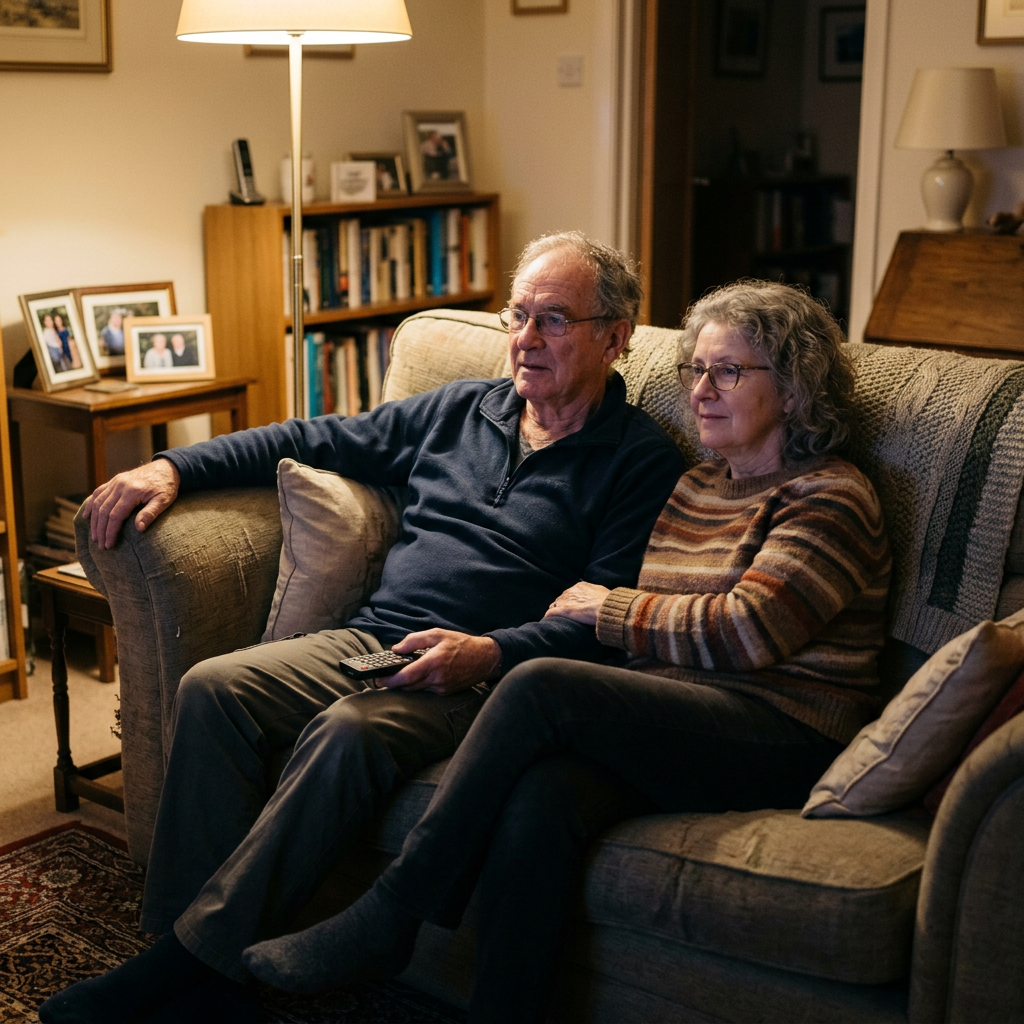
Halfway through, she looked at me and said, "You're still sitting."
That was the proof that got me.
Not a number on a pain scale.
My wife noticing I had stopped planning my escape from a chair.
I did not get my twenties back. I got a Saturday night chair back. At fifty-nine, that felt bigger than it sounds.
It is not a miracle and I will not pretend it is.
It built slowly over weeks, the way the research and the real stories said it would.
For me, that slowness was the proof.
If it were a stimulant or numbing trick, I would have felt fooled again.
This felt like the alarm gradually getting quieter.
What another year of waiting actually costs you.
- More nights sleeping like your own hip is a loaded trap.
- More meals where you stand, pace, or leave early.
- More drives planned around where you can pull over.
- More money spent on cushions, bottles, braces, and support that pads the problem instead of calming the nerve.
- More doubt every time someone says, "But the scan was clean."
- More weeks letting an angry nerve practice being angry.
What Sciatica Really Costs In America (And Why The Math Stops You Cold)
Before you scroll past the price, let me show you what the medical system would charge a guy like me to "manage" this for the next three years. I am the kind of man who checks the bills. The math is obscene.
Over three years, the system can bill you north of $60,000 to manage a problem the body was built to calm itself.
No more - the part you stop noticing first.
No more standing through dinner pretending you prefer the view.
No more pulling over on drives just to get the leg quiet.
No more sleeping in the recliner because side-sleeping wakes the pain.
No more calculating which chairs you can survive before you walk into a room.
No more $400 bottles, $9,000 epidurals, and "give it six weeks" appointments.
No more family events you said no to because the drive was too long.
I waited four months and I regret every week of it.
Not because PEA fixed me overnight.
Because I was so busy refusing to be fooled that I almost refused the first thing that matched the problem.
If you have read this far, you are probably about where I was.
Unconvinced. Irritated. A little embarrassed for even checking.
So I will tell you what I did, the way I would tell my brother.
I take the micronized 600mg PEA from Youfirst every morning.
I started with one bottle because I did not trust myself enough to buy more.
Looking back, the subscription made more sense because this works over weeks, not over one desperate night.
I had already burned about $400 on things that did not calm the nerve.
The math was not complicated.
I will be straight with you because that is the only reason I trusted it myself.
That 1.7 number is the part that finally got me. In plain English: roughly seven out of every ten patients on micronized PEA at this dose hit a clinically meaningful reduction in pain. That is the kind of responder rate prescription gabapentin would kill for.
It built over weeks for me. Week two was driving. Week four was sitting through a film. Week twelve I had to think for a second to remember which leg it had been.
That is the ceiling I lived.
The reason I was willing to test it anyway was the guarantee.
They give you 90 days. If it does nothing for you, you send it back and get a refund.
Ninety days was long enough to find out.
That is more than I can say for most of the things I bought in panic.


You can close this tab, and tomorrow the chair will still be there, the car seat will still be there, and the clean scan still will not explain why your leg keeps firing.
That is not a threat.
It is just the part that does not change because you decide not to look at it.
This is the one I take. Check if the current batch is still available where you are.
Get the bottle Ray takes →90-day money-back guarantee. If it does nothing for you, send it back for a refund.
In eighteen months and 47,000 bottles shipped, the refund rate sits at 0.4 percent - roughly four people per thousand. Two of them could not swallow capsules (we should have asked). One returned an unopened bottle because his sister had already gifted him one. The rest were honest non-responders, refunded within 48 hours, no forms, no friction.


P.S.
The cushion is still in my closet.
The bottles I wasted money on are still on a shelf because I keep meaning to throw them out and never do.
The tennis ball is in the garage.
Some nights I see them before bed and remember how angry I was at myself for buying another thing.
Then I get in bed, roll onto my side without rehearsing it first, and think about the drive to my mother's house.
Not because everything is perfect.
Because for almost two years I did not believe I would get even that back.
P.P.S. If you are the "give it six weeks" reader - the one whose obvious injury settled but whose leg keeps firing - the nerve does not switch off when the doctor stops examining it. An angry nerve needs the calming signal your body should still be making and is not. Patricia from Indiana cancelled her surgery on this bottle. Read her message again if you missed it.
P.P.P.S. If you are the "clean scan" reader - the one whose MRI says nothing is wrong while your glute feels like a golf ball - the muscle is called the piriformis. The disc scan cannot see it. The stretches your physio prints tighten it. Calming the trapped nerve underneath is what gives the muscle room to release. Wayne lived this for two years before someone said the word out loud.
P.P.P.P.S. The form to look for is micronized and the dose on this bottle is 600mg. The current run showed 1,417 bottles left the last time I checked. Sold direct at the official Youfirst site, not Amazon. The next milling and testing cycle is six to eight weeks. If the only thing you take from this article is the name of the compound and you buy it from someone else, I am still glad I wrote this. Just check the form and the dose.
Comments
Bottle 1 arrived Thursday. Drove to my daughter's on Sunday. First drive without bracing in seven months. Ordered a second bottle that night.
Doctor told me to live with it. I'm 71. Three weeks on this and I'm back in the garden. My wife noticed before I did.
Bought one for my mother for Mother's Day. She called me crying after week four. Good crying. She cancelled her February surgery and walked me through her empty pill drawer over FaceTime.
Pittsburgh. Two clean MRIs. Six months of PT. One epidural. Nothing touched the leg. Week four on this and I sat through Mass for the first time since November.
I returned the last three nerve-support bottles I tried. I kept this one. That should tell you enough.
Skeptical. Cheap. Stubborn. Bought it for my wife first. Now I take it too.
Three Messages That Came In After I Posted This Story