For Fourteen Months I Could Walk Just Fine — but the Second I Sat, Both Knees Locked Like Rusted Hinges. Then I Found What Was Keeping Them Lit.
By week two the mornings loosened; by week four I stood from a chair without gripping. Here's what cortisone and two orthopedists all missed about why my knees kept grinding.

If your knees feel thirty years older than you every time you stand, you are not falling apart. I was just like you: planning rooms by what I could grip, half-certain this was just sixty-three. Then I found the one thing that let me stand without reaching for the table.
My name is Connie. Sixty-three. School librarian, retired. Mother. Grandmother. Dayton, Ohio.
6:55 AM: My Knees Decided The Day Before My Feet Touched The Floor
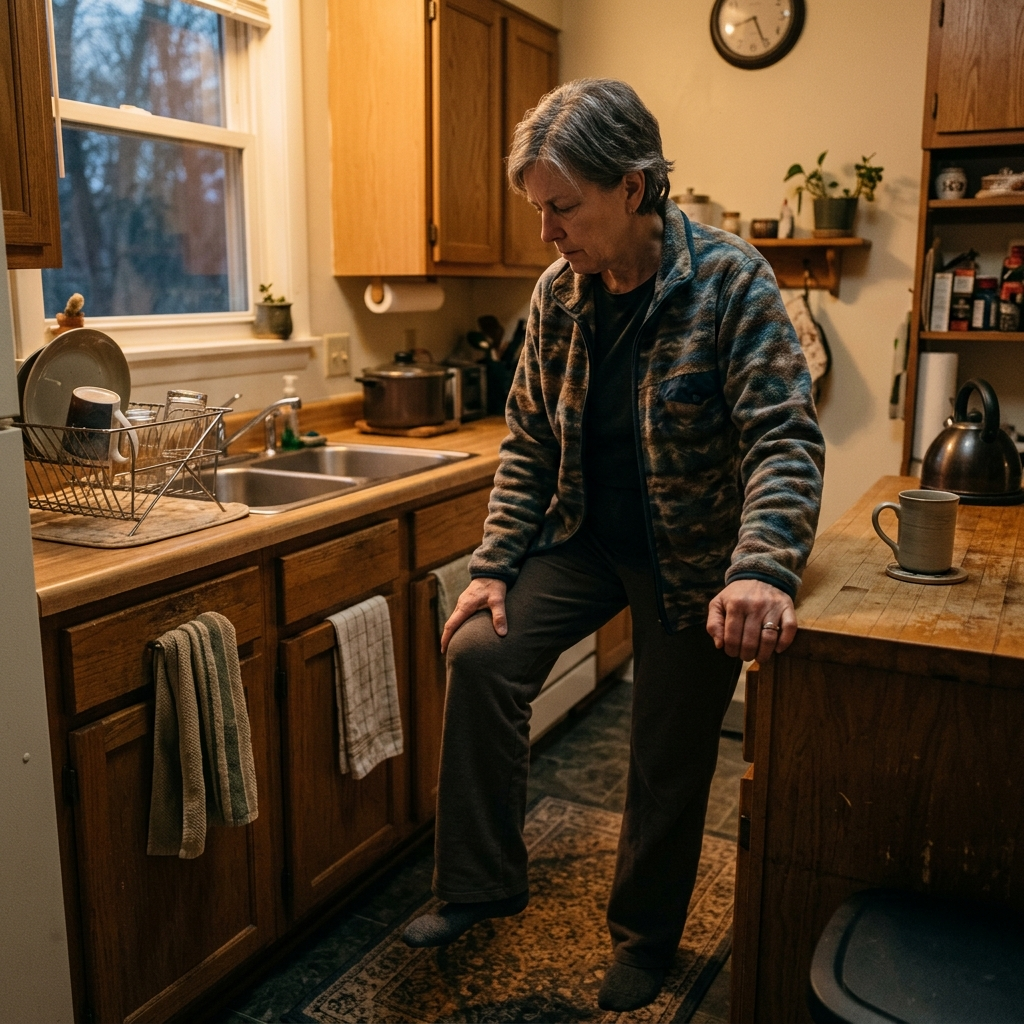
It started the way most mornings did. I swung my legs off the bed, pressed both feet flat, and my left knee locked like a rusted hinge. The right one ground when I straightened it. I stood holding the nightstand and waited for something to release.
Three steps to the bathroom. Each one a negotiation. My daughter once said I walked like I was crossing a frozen pond — slow, stiff, both arms out, testing every step before I committed my weight.
That became my life. Mornings at the counter edge. Stairs one at a time, grip on the rail. Lowering myself into chairs like a controlled fall and climbing out like a woman twice my age.
The worst was the floor. My granddaughter would pull my hand and say, "Sit with me, Grandma." I stopped sitting with her because I was not sure I could get back up without someone watching me struggle.
Three or more of these describe your morning?
- Knees, hips, or lower back that grind, stiffen, or lock after any period of sitting or lying down
- The first five to ten minutes of standing or walking that feel like your joints need to "warm up" before they work
- Stairs you take one at a time, or avoid entirely, because your knees will not trust the step
- Getting up from a chair, a car, or the floor that requires gripping something nearby
- A knee or hip that gives out, catches, or buckles without warning
- An X-ray that came back "mild" or "moderate" while your body feels like it is eighty
Three or more? Then this article is for you. The missing piece is the same no matter which joint is grinding.
Four Minutes With Dr. Reese. An X-Ray. "Bone on Bone." Then Nothing.
I brought a list in my purse because I did not trust myself to keep it together. Left knee grinds on stairs. Right hip stiff every morning. Cannot get off the floor. Ibuprofen three times a day and my stomach is paying for it.
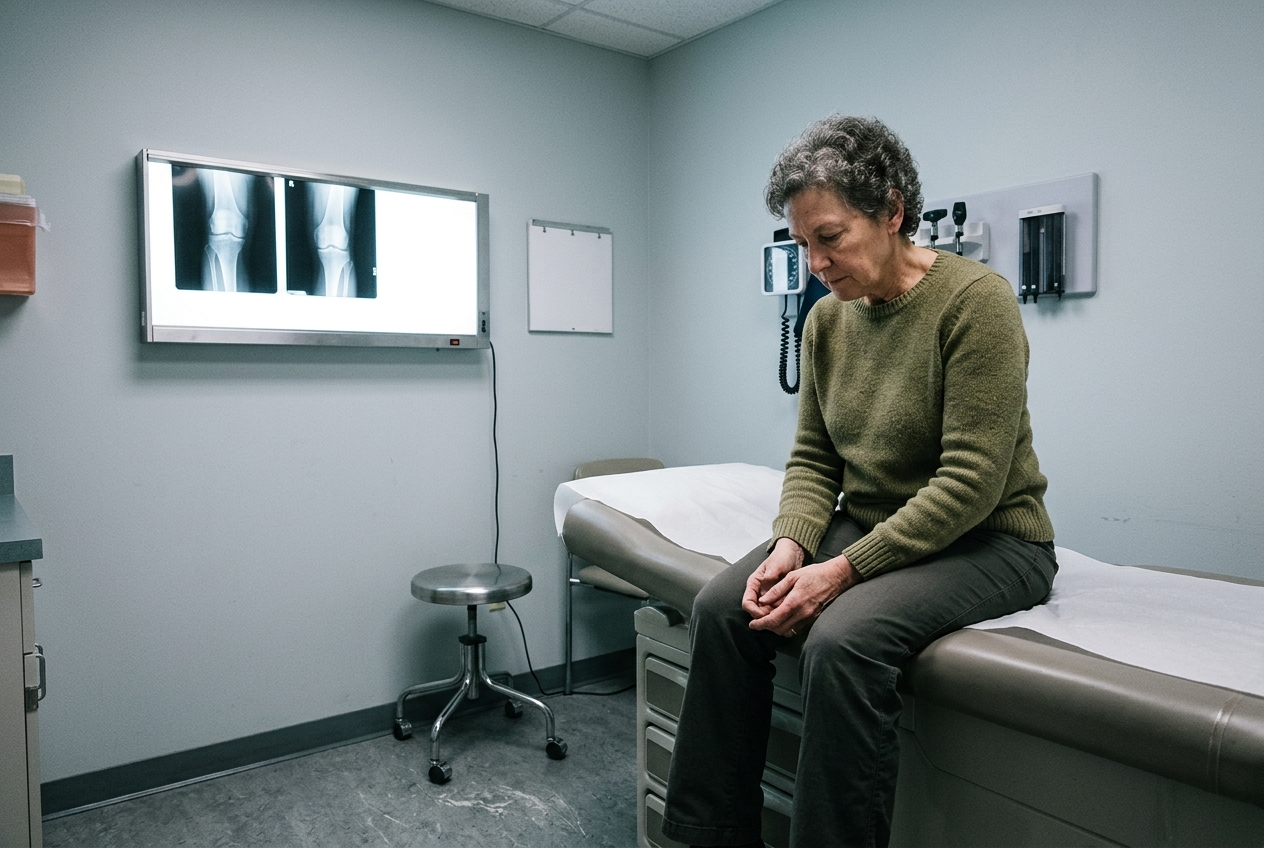
Dr. Reese pulled the X-ray onto her screen, pointed where cartilage used to be, and said the sentence I would hear for fourteen months.
"Bone on bone in the left. Moderate wear in the right. We will talk replacement when you are ready."
She did not say inflammation. She did not say that a joint can scream because something around it is firing even after the cartilage story has been told.
She treated the X-ray, not the fire around the joint.
Four minutes with the X-ray. Fourteen months gripping furniture to stand.
Eleven Things I Tried Before PEA and What They Cost Me
I am going to lay this out plainly, because I want you to see the trap I was in. You might be standing in it right now.
Eleven things. Fourteen months. Roughly $2,100 out of pocket, plus the mornings I spent at the counter edge and the stairs I stopped taking.
The worst part was not that each thing failed.
The worst part was that every failure trained me to believe the X-ray was the whole story.
The forums were full of people like me.
"I could NOT get up. I looked like I was 87 yrs old."
"If this is mild, then what is moderate or advanced?!?"
"I would come home and sit in my car, in extreme pain for up to 2 hours, before I could get out."
"I desperately want my life back."
I was not describing a wear problem. I was describing a fire the X-ray could not see.
My Granddaughter's Birthday Party and the Floor I Could Not Get Up From
The day it broke me was Lily's fifth birthday.
A Saturday at my daughter's house. Wrapping paper everywhere. Six children cross-legged on the living room floor.
Lily pulled my hand. I lowered myself using the coffee table. When presents were done I pressed both palms flat and pushed. My left knee refused. Nothing.
My son-in-law helped me up. The room went quiet.
Lily said, "Why can't Grandma's legs work?"
I told her my legs were just a little tired and went to the kitchen.
Then I leaned against the counter and cried into a paper towel while the children sang happy birthday in the next room.

I remember thinking, this is how my life gets smaller.
First the floor. Then the stairs. Then the garden. Then I stop saying yes because every seat is a calculation.
At sixty-three, this is how women I know end up needing help they never planned for. Not one fall. A thousand small workarounds — favoring the knee, skipping the stairs, a stumble, a hip, a conversation nobody wanted.
I was not going there. Not over a knee.
The Search That Named the Fire
Two nights later I typed the sentence I was embarrassed to search: "bone on bone knee pain nothing helps except surgery."
Pages of people. The same shape of grinding across different joints, different scans, different surgeons. One sentence kept appearing: the bone-on-bone is real, but the daily pain comes from the inflammation packed around the joint. You can put out a fire without regrowing what burned.
The X-ray and the pain are not the same thing. An X-ray grades the cartilage. The inflammation is what screams. Replacing the cartilage means surgery. Calming the fire is what lets you stand.
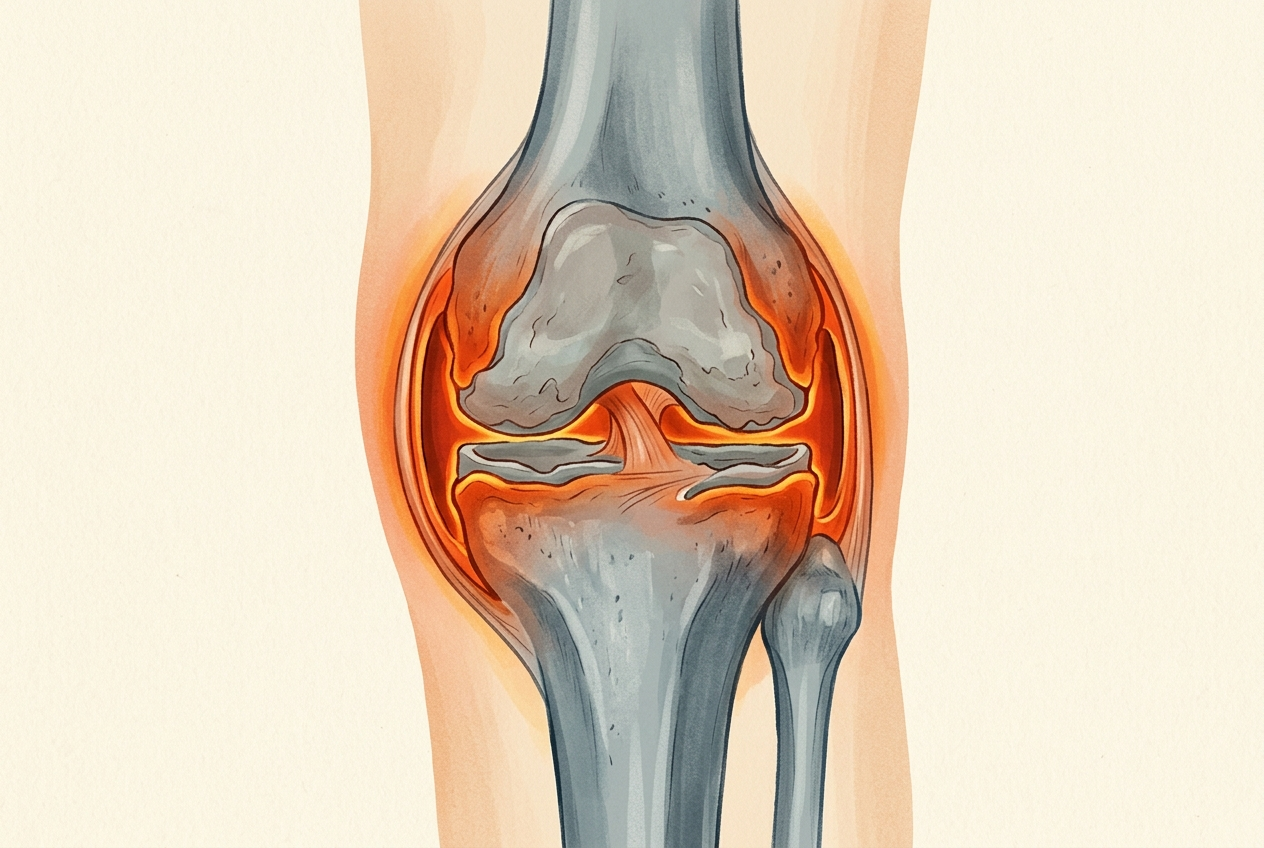
Three fires. One joint. One calming signal the body already makes that quiets them all.
That is where I found PEA.
Palmitoylethanolamide. I could not say it the first week. Now I take it every morning.
Your body already makes it. The research kept pointing to the same idea — PEA helps calm the overactive inflammation that keeps chronic joint pain fired up.
What The Research Actually Says
I am not a doctor. I am a retired school librarian who has read more clinical abstracts than I ever planned to. Here is what I found, with citations.
Sources: Steels et al., 2019 double-blind placebo-controlled knee-OA study; Lang-Illievich et al., 2023 Nutrients systematic review and meta-analysis of PEA in chronic pain; Schweiger et al., 2024 extended meta-analysis.
Why Nobody Named It in the Office Where I Was Paying to Be Helped
Your body makes PEA. No drug company can patent it.
No $400-a-month branded version for an insurance line item. No sales rep walking into Dr. Reese's office with PEA samples and a free lunch. No imaging study that shows a joint clearing up because the billing code does not exist.
The system is built to see what it can photograph, inject, replace, or bill.
Nobody told me the fire around the joint could keep burning even after the X-ray told its whole story. That was the missing piece.
So I went looking for the right bottle myself. The form mattered. The dose mattered.
In ordinary form, PEA is hard for the body to absorb. The one I chose was micronized — particles milled small enough that the body has a real chance of using them. Most cheap PEA on the shelf is not micronized. The label will not always tell you.
And it was 600mg, the dose tied to the clinical research and the product protocol.
Less than that, or the wrong form, and I would end up with one more bottle that looked right on the label and did nothing where it counted.
Stock check, this morning. This batch opened at over 5,200 bottles. As of the time I am writing this, 876 are left in the current run. Bottles have been moving faster than the mill is replacing them.
Why So Many Adults Over 55 With Bone-on-Bone Joints End Up Facing a Replacement — and Why Ibuprofen and Cortisone Never Reach the Cause
 By Rachel Calloway, Health Correspondent✓ Verified reporting
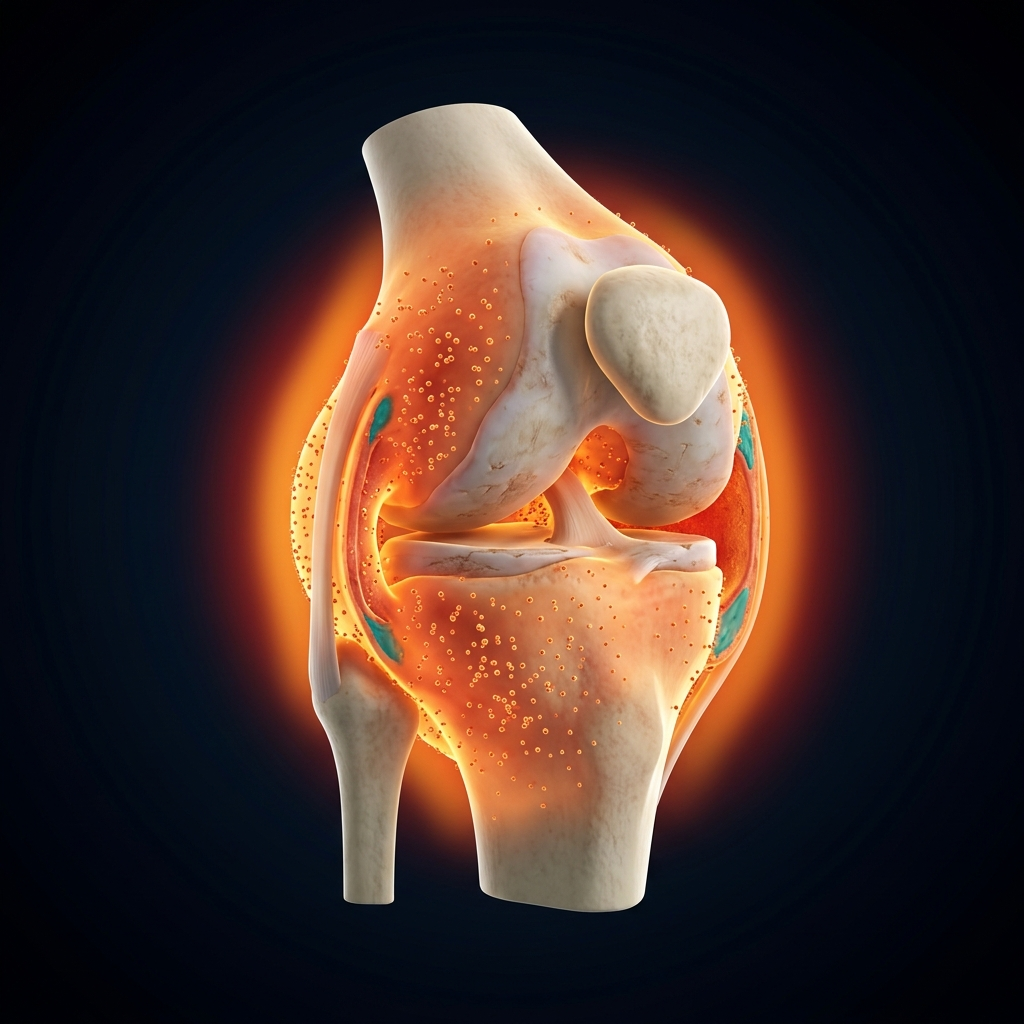
If your mornings now start with a negotiation — which knee unlocks first, whether the stairs are worth it, which chair you can get out of — the problem may not be your age or your effort. It may be that the usual fixes are aimed at the wrong target.
6:47 a.m. The joint decides who moves
Something changes, and for a while you call it aging. You push up from a low seat at dinner and the knee catches, grinding, both hands on the table before your legs hold weight. Your daughter reaches to help and you wave her off, already calculating which chairs you can safely get out of for the rest of the evening.
Then it is the staircase you start rationing, one step at a time, rail in a death grip. The grandchild on the carpet you cannot get down to. The errand you quietly drop because the walk from the parking lot to the store has become the hardest part.
Most people tell themselves what the doctor already said: cartilage is gone, it is age, nothing to do but manage it until you are ready for the replacement.
But the cartilage may not be what is screaming. And the X-ray may have missed what is.
Before the mechanism matters, the pattern matters. A problem that starts as one stiff morning quietly becomes a day planned around rails, chairs, and exits.
The Pattern Most Joints Quietly Accept

Before the mechanism is explained, count the workarounds that may have quietly become normal.
Three or more? Then the missing piece may not be effort. It may be an inflamed joint that has stayed lit long enough to reorganize the way you move through your own home.
The usual explanation sounds reasonable. Then life keeps shrinking.
The visit usually goes the same way. The doctor looks at the X-ray, points at the narrowed joint space, and lands on the sentence most people in this spot hear:
"The cartilage is worn. It is what it is. When you are ready for the replacement, we will talk."
What rarely gets said in those seven minutes is the part that matters. A joint can keep screaming because the inflammation around it is still active, long after the original wear is done progressing.
Treated as structural decline, it gets sent home to wait for the replacement.
Seven minutes in a room. Years of a life planned around handholds.
What The Pattern Points To Inside The Joint
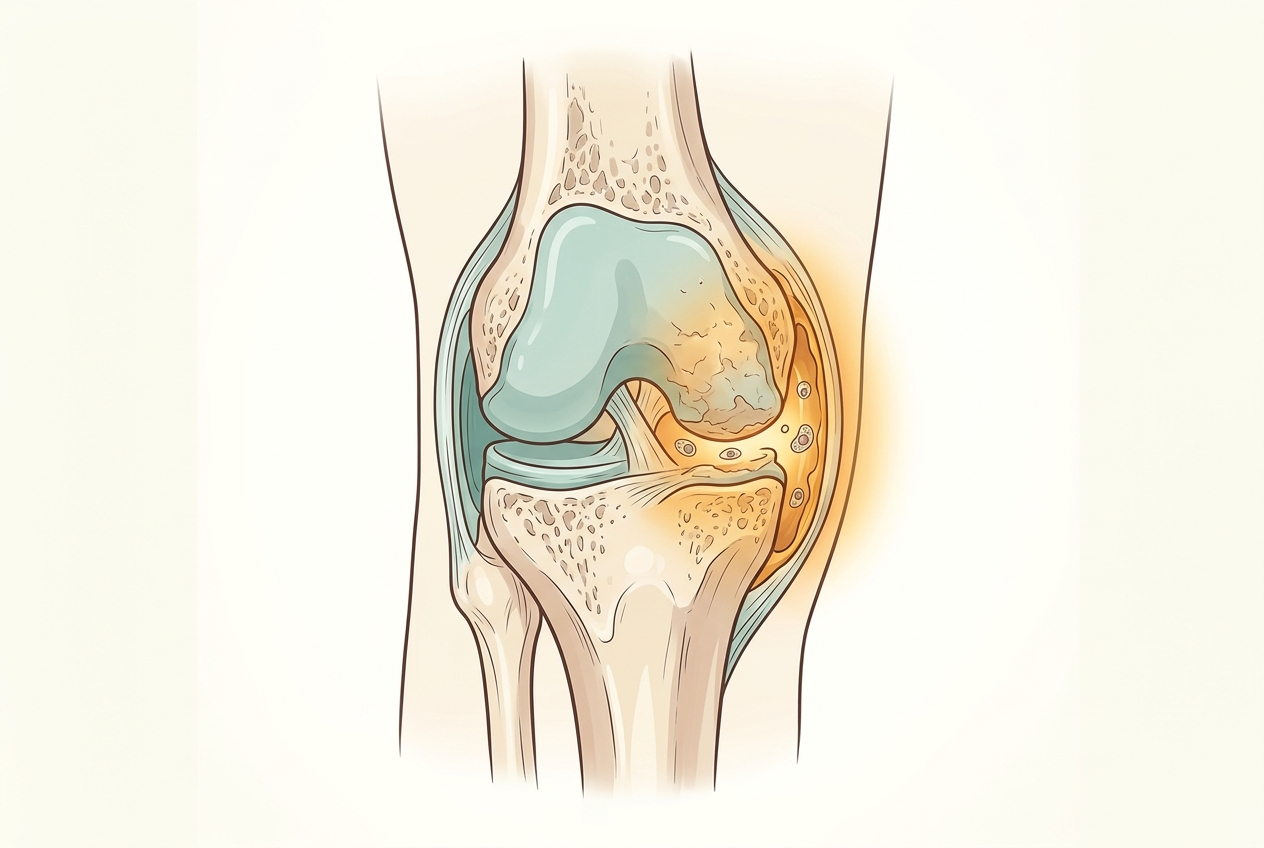
Once the pattern is visible, the usual one-word explanation starts to look incomplete: worn out.
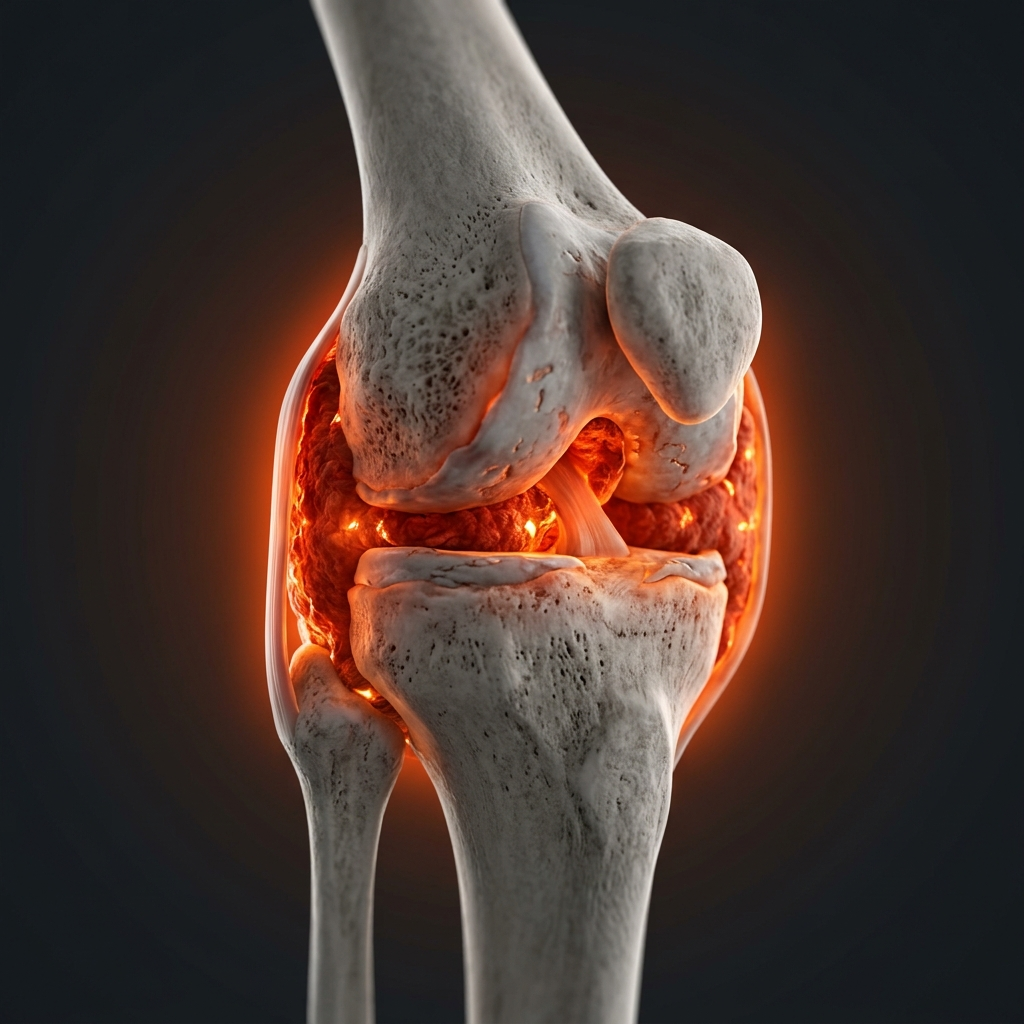
Yes, the cartilage is damaged. But researchers also describe a second layer: the joint can become chemically inflamed and raw, so ordinary standing, bending, or walking lands on it the way a seatbelt lands on sunburned skin.
That rawness is kept alive by over-active mast cells in the joint lining and glial cells in the spinal cord that turn up the volume on every pain signal the joint sends out.
That is why a person can rest, stretch, take the anti-inflammatory, and still feel the same grinding catch when they stand up from a chair.
The Things People Try First, and What They Cost
Most people do not arrive here because they gave up. They arrive after trying the obvious things first.
That is the trap: each attempt is reasonable. But if the joint is already inflamed and over-amplified, surface fixes and structural supports keep missing the fire inside.
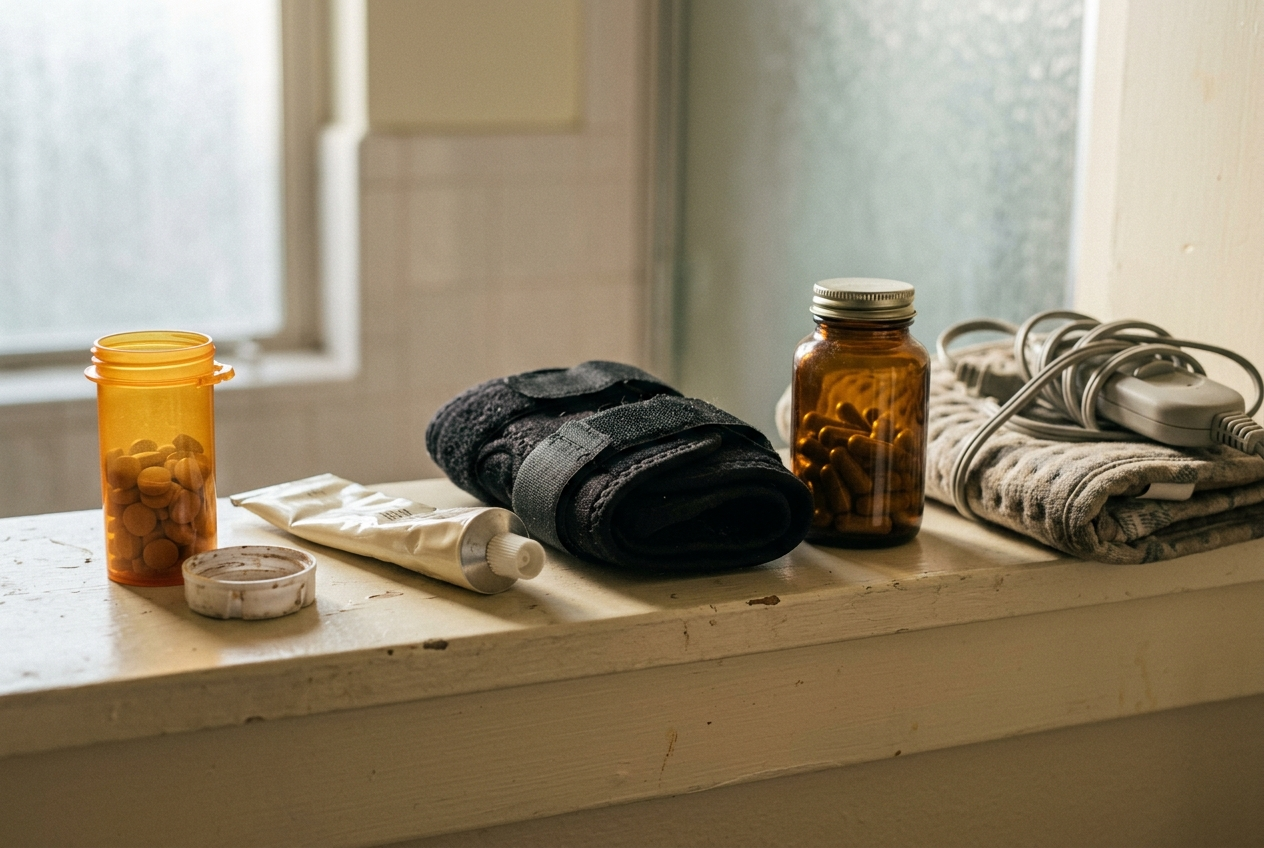
The honest summary is short. The three things almost everyone reaches for first — the painkiller, the brace, the topical — each act on something other than the inflammation itself.
An NSAID dulls broad inflammation. It can quiet the joint for a few hours, but it is not built to restore the body’s own calming signal at the joint.
Cortisone knocks the fire down hard. It often works quickly, but the relief tends to fade in two to three months, and repeated rounds may thin the cartilage faster.
A brace changes the load. It can make walking less painful, but if the joint is inflamed from the inside, outside support is not the whole answer.
The Compound Doctors in Italy Have Used for Over Twenty Years

PEA, palmitoylethanolamide, is not a new molecule and not a herb. Researchers describe it as a fatty compound the body makes on demand to calm inflammation. It has been studied since 1954.
The mast-cell calming mechanism was characterized in 1993 by the laboratory of Nobel laureate Rita Levi-Montalcini. In Italy, PEA has been used for joint and nerve pain for more than twenty years.
Most Americans have never heard the name for a plain reason: a compound the body already makes cannot be patented, so few companies have the incentive to turn it into a household name.
The evidence, though, is published and searchable.
Steels et al., 2019. A double-blind, randomized, placebo-controlled trial found that PEA attenuated pain and associated symptoms in knee osteoarthritis patients. Search "Steels PEA knee osteoarthritis 2019."
Lang-Illievich et al., 2023, Nutrients. A systematic review and meta-analysis of 11 double-blind randomized trials covering 774 chronic-pain patients found PEA beat control on pain intensity (p < 0.00001).
Schweiger et al., 2024, Nutrients. An extended meta-analysis of micronized PEA reported a 35% pain reduction by month one and continued improvement through month two.
In a 2023 systematic review of 11 double-blind randomized controlled trials, PEA showed statistically significant pain reduction versus control. A separate placebo-controlled knee-osteoarthritis trial reported measurable joint-pain relief. The takeaway was measured, not miraculous: gradual inflammation reduction, not an instant painkiller.
That building effect matters for what to expect. We will come back to it.
Before You Buy Any PEA: The Label Check Most Buyers Learn Too Late
There is a trap for people who do their homework: they buy a shelf "PEA" or "joint support," take it for a month, feel nothing, and decide the compound was hype. Often, the label tells the whole story.
The label check most buyers learn too late
The Product That Meets All Three Conditions
To actually work, a PEA needs three things at once
YouFirstLabs PEA 600mg (Micronized)

Free US shipping · 90-day money-back guarantee